Location:
Seddon Street
Waihi 3610
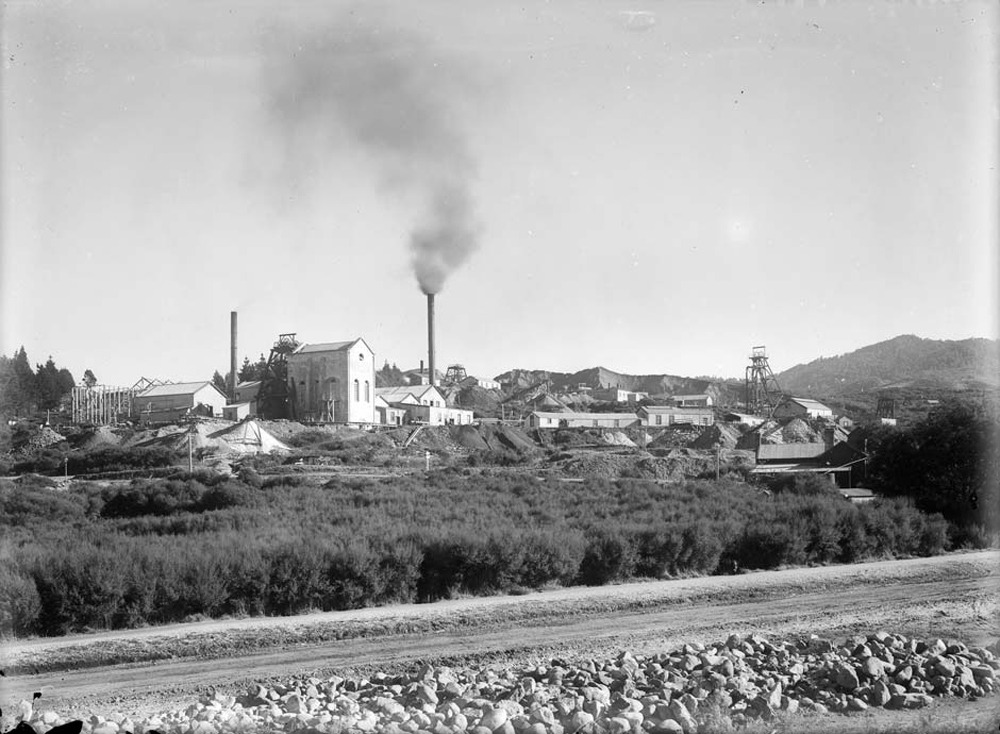
The Martha Mine, which operated from 1882 to 1952, was regarded as one of the most productive goldmines in the world. Around its extensive underground workings developed the town of Waihi. As the workings followed the quartz reefs downwards, increasing quantities of water were encountered, necessitating the installation of major pumps.
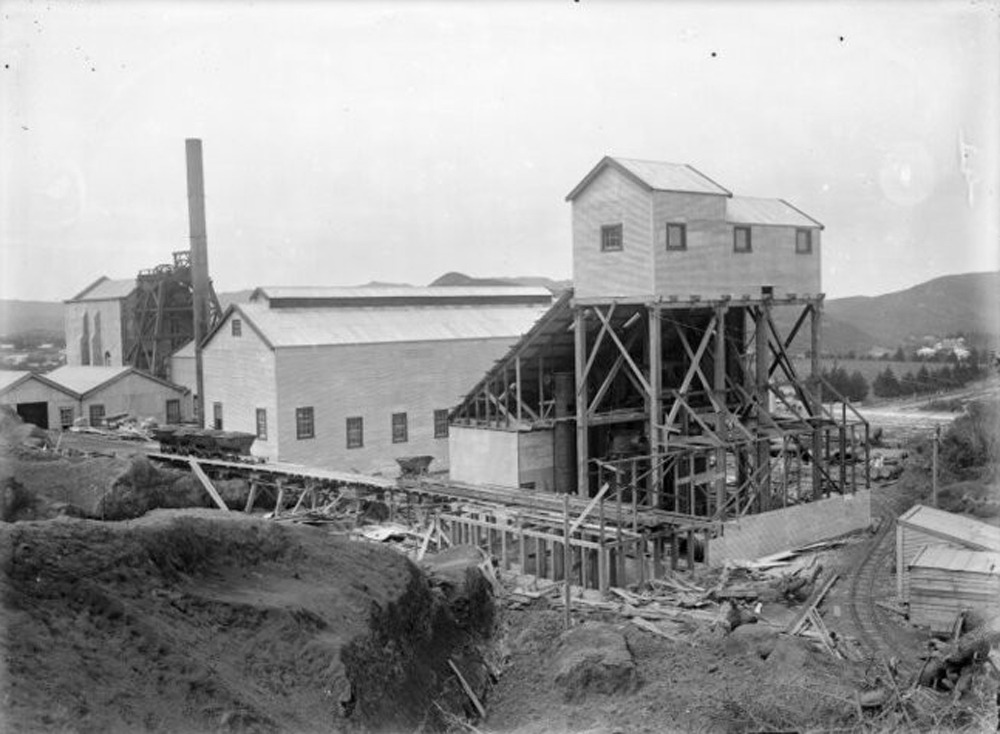
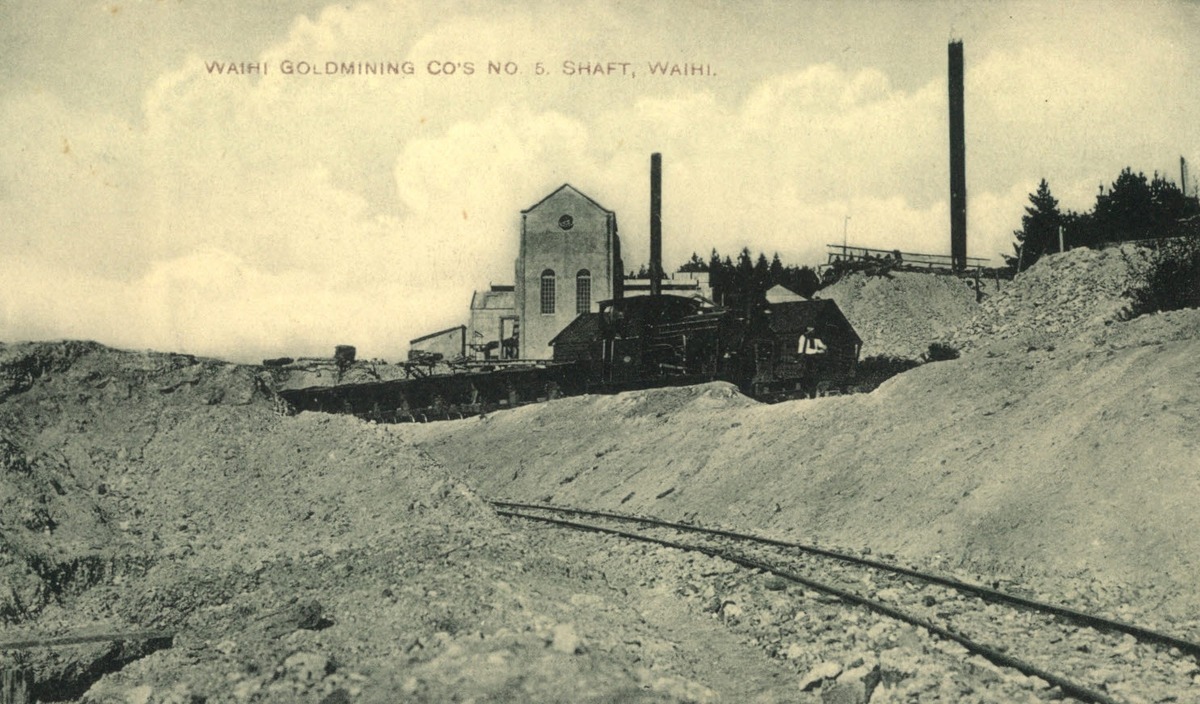
The pumphouse was built around the eastern legs of the No.5 shaft poppet head to house steam engines and pumping equipment. In 1902 the first (B) pump was installed west of No. 5 shaft and in 1904 the massive (C) steam operated pump, housed inside the pumphouse complemented the (B) pump. The two pumps could raise water from the underground mine at a rate of 382,500 litres per hour. The compound Hathorn-Davey differential pump engines were powered by four Babcock and Wilcox boilers. With the introduction of electric power (and electric pumps within the mine) supplied from the Waihi Gold Company’s Horahora Power Station the operation of the (C) pump was progressively scaled back until it was scrapped in 1929 and the building became derelict.
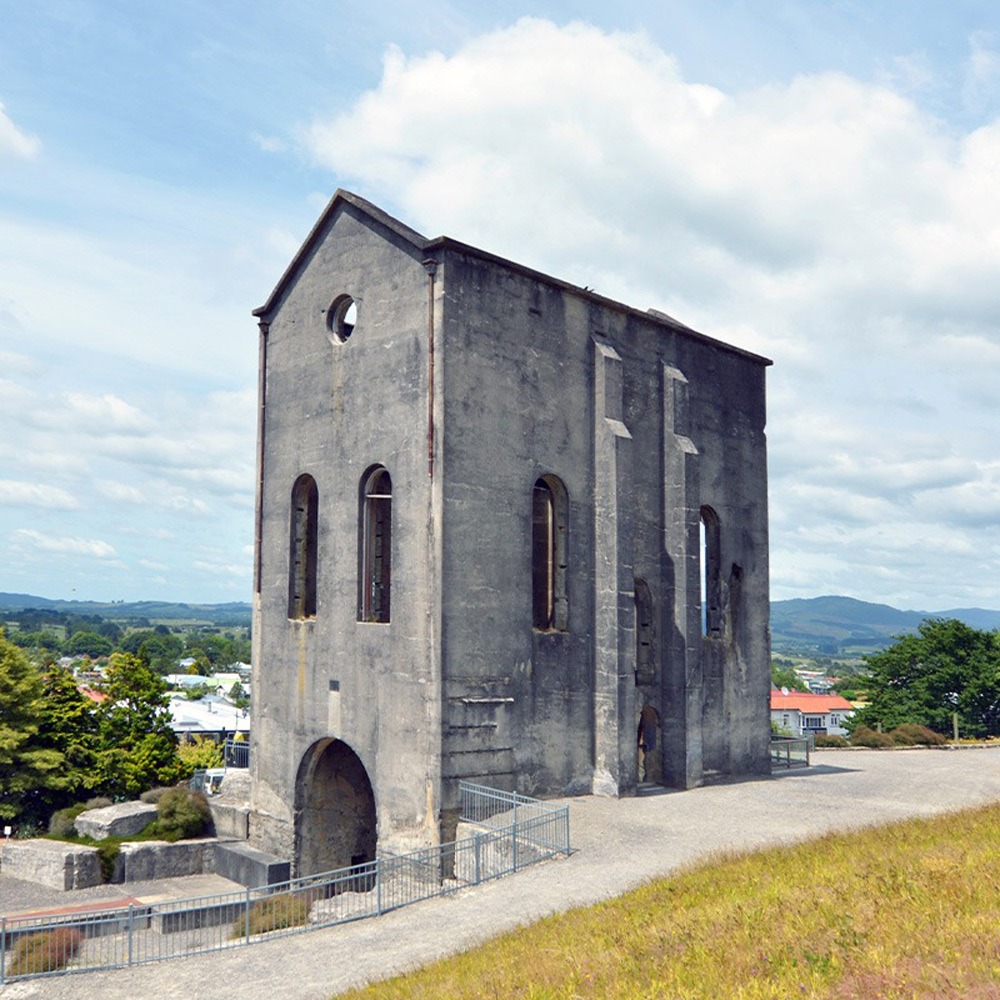
The smoke stack was 30.5 metres high. In 1913 a change was made to electric centrifugal pumps. In 1952, the pumphouse was stripped of its machinery, abandoned and allowed to become a ruin. In 2006 it was moved from its original site on Martha Hill to a new location at the top of Seddon Street.
The Martha Mine was the biggest goldmine in New Zealand, and a large mine on a world scale. The two pumps at the No 5 shaft raised about 9,000,000 litres of water per day from the mine workings. The concrete pump house housed the boilers and machinery of the larger of the pumps in this shaft. It affirms the growing use of concrete for industrial buildings at the turn of the century and is a utilitarian structure with no obvious architectural derivation or pretension. Its dramatic appearance is enhanced by its isolation and by the open roof and window apertures.
The design was based on the pumphouses used in the tin mines of Cornwall, England.
In 2006 it was moved to its present position due to the instability of its previous position on the edge of the pit.